Showing posts with label Police State. Show all posts

Saturday, 20 June 2026

Has India Become a Police State Under BJP Rule?


Has India Become a Police State Under BJP Rule?

SR Darapuri I.P.S.(Retd)

Download Indian Police On Patrol Wallpaper | Wallpapers.com

The question of whether India has become a police state under the rule of the Bharatiya Janata Party (BJP) is one of the most contentious issues in contemporary Indian politics. Critics argue that the growing power of law-enforcement agencies, increasing restrictions on civil liberties, misuse of preventive detention laws, custodial violence, and suppression of dissent indicate a drift towards a police state. Supporters of the government, however, maintain that strong policing measures are necessary to ensure national security and public order and that India's democratic institutions continue to function effectively. An objective examination of the issue requires an understanding of both perspectives.

A police state is generally defined as a political system in which the government exercises extensive control over society through police and security agencies. Such a system is characterized by arbitrary arrests, widespread surveillance, suppression of dissent, weak judicial oversight, violations of civil liberties, and law-enforcement agencies operating with considerable impunity. The debate in India revolves around whether recent developments have brought the country closer to such a model.

One of the principal concerns raised by critics is the increasing use of preventive detention laws and special security legislation. Laws such as the Unlawful Activities (Prevention) Act (UAPA) and the National Security Act (NSA) provide authorities with extensive powers to detain individuals for long periods. Human rights activists argue that these laws have increasingly been used against journalists, students, social activists, and political dissenters. Since obtaining bail under such laws is often difficult, individuals may spend years in prison before their guilt or innocence is established in a court of law. Critics contend that this undermines the fundamental principle that a person is innocent until proven guilty.

Another major concern relates to allegations of false implication in terrorism and unlawful activities cases. Over the years, several individuals accused of terrorism have eventually been acquitted after spending long periods in jail. Such cases have raised serious questions about the quality of investigations and the accountability of investigative agencies. Civil liberties advocates argue that prolonged incarceration followed by acquittal amounts to a grave miscarriage of justice and creates a climate of fear among citizens.

Custodial torture and deaths in police custody constitute another area of concern. Despite constitutional protections and judicial guidelines, reports of custodial violence continue to emerge from different parts of the country. Human rights organizations have repeatedly highlighted instances of torture, illegal detention, and deaths in police custody. Critics argue that police personnel are rarely held accountable and that the low rate of convictions in such cases encourages a culture of impunity within law-enforcement agencies.

The issue of police encounters has also generated considerable controversy, particularly in states such as Uttar Pradesh. Governments often defend encounters as necessary measures against dangerous criminals and organized crime. However, human rights groups have alleged that some encounters may be staged or conducted without following due legal procedures. They argue that extra-judicial killings violate the constitutional guarantee of life and personal liberty and weaken the rule of law.

The handling of protests and dissent has further intensified concerns about democratic freedoms. Critics point to police action against protest movements, restrictions on public gatherings, internet shutdowns, and criminal proceedings against activists and journalists as evidence of shrinking democratic space. According to this view, the growing use of police and legal mechanisms to regulate dissent reflects an increasing intolerance of criticism and opposition.

At the same time, it is important to recognize that many of these problems are not unique to the BJP era. Custodial torture, fake encounters, political misuse of police forces, corruption, and violations of human rights have been persistent features of the Indian policing system for decades. Successive governments at both the central and state levels have been criticized for using police agencies to advance political objectives. Therefore, some analysts argue that the current situation reflects long-standing structural weaknesses rather than a transformation into a police state.

Supporters of the BJP government reject the characterization of India as a police state. They point out that India continues to conduct regular and competitive elections, opposition parties govern several states, and courts frequently intervene to review executive actions. They argue that a true police state would not permit such democratic processes. Furthermore, they contend that strong security measures are necessary to combat terrorism, organized crime, separatist movements, and communal violence, all of which pose significant challenges to public order and national security.

The continued existence of an independent judiciary, a vibrant civil society, and a diverse media landscape is also cited as evidence that India remains a functioning democracy. Although critics argue that these institutions face increasing pressure, supporters maintain that they continue to exercise significant influence and provide checks on governmental power.

International assessments of India's democratic condition have added another dimension to the debate. Several democracy-monitoring organizations have expressed concern about declining civil liberties and democratic backsliding. Some have classified India as an "electoral autocracy" or an "illiberal democracy." These classifications suggest that while elections remain competitive, important democratic freedoms may be under strain. However, most observers stop short of describing India as a full-fledged police state.

In conclusion, whether India has become a police state under BJP rule remains a matter of interpretation and political perspective. There is substantial evidence of concerns regarding preventive detention, anti-terror legislation, custodial violence, encounter killings, and restrictions on dissent. These developments have led many observers to warn about the erosion of civil liberties and the growing power of law-enforcement agencies. At the same time, India continues to possess important democratic features, including regular elections, an active judiciary, opposition parties, and a functioning civil society. Consequently, it may be more accurate to view contemporary India as a democracy facing serious challenges to civil liberties and the rule of law rather than as a complete police state. Nevertheless, the concerns raised by critics underscore the importance of strengthening accountability, protecting constitutional rights, and ensuring that law-enforcement agencies operate strictly within the framework of democratic norms and the rule of law.

Sunday, 20 September 2020

The authors, Steven Levitsky and Daniel Zibalatt, in their famous book titled “How Democracies Die: What History Reveals about Future” have said that “Democracies can die with a coup d’etat- or they can die slowly. This happens most deceptively in piecemeal fashion, with the election of an authoritarian leader, the abuse of governmental power and the complete repression of opposition. All these steps are being taken around the world- not least with the election of Donald Trump- and we must understand how we can stop it.”

Now if we look at our own country it appears to be equally true. Are not all the phenomenon described by the above authors taking place in India? Apart from election of Modi as an authoritarian leader and complete repression of opposition, the abuse of governmental power is so obvious. Among the governmental powers police is the most powerful instrument in the hands of any government. In fact it is said to be the power arm of the state. In general, police is said to be an instrument to maintain law and order, prevent crime, investigate crime and protect people in the exercise of their rights. But it is a universal truth that often police is used as an instrument by the state to suppress the opposition and the citizens who are not in agreement with policies and actions of the government. As such the government tends to give more and more powers to the police. Hence, by and by, the democratic set up turns into an authoritarian set up maintained with its power arm i.e. the police. By and by the other institutions of the state are also transformed into an authoritarian mode. Finally the democratic state becomes a police state.

Now if we look at our country we find that since the ascendancy of BJP under Modi to state power in 2014, the state has been becoming more and more authoritarian. The police in every BJP ruled state has been given more and more powers and a free hand to deal harshly not only with criminals or law breakers but also with dissenters and political opponents. The draconian laws like UAPA and NSA are being misused along with normal penal provisions. The result is that a very large number of intellectuals, writers, and social activists and human rights defenders have been booked under UAPA and NSA. Bheema Koregaon case is a dreadful example of it.

Gujrat and Uttar Pradesh are the states where police suppression is the worst. In Uttar Pradesh Yogi has given a free hand to the police to carry out “Operation Thok Do” i.e. bump off the criminals operation. The state has carried out more than 5000 encounters in which more than 100 persons have been killed and a very large number have been shot in leg or feet. Of course the maximum number of killed and injured are Muslims followed by Dalits and most backward class people. Gujrat model of encounters carried out  as a state policy is being faithfully followed, even sometimes surpassed, in Uttar Pradesh. A very large number of persons have been detained under NSA. The number might surpass detentions during emergency. Here also the proportion of Muslims and Dalits is the same as in encounters.

At present we are facing the Corona crisis. The people are dieing not only due to Covid 19 infection but they are faced with suppression by the state in the name of controlling the pandemic. As we know there has been in place a law known as “The Epidemic Diseases Act, 1897 which has been used so far during various epidemics. This Act had only 4 sections. For violation of the government orders issued under this Act, Sec 3 provided for a maximum punishment of one moth’s jail and a fine of Rs. 200. But in March Modi govt. has amended it to provide  a maximum punishment of imprisonment from 3 months to 5 years and a fine of Rs. 50,000 to 2 lacs  for causing simple injury and an imprisonment from 6 months to 7 years and a fine of Rs. 1 lac to 5 lacs for causing grievous hurt to Corona Warriors. In addition to it there is a provision for recovery of damages to the property at the double cost of loss.  From this you can see that the British and previous governments could tackle the epidemic with a threat of a very minor punishment but Modi government has enhanced it to a very harsh punishment. It aims at terrorising the common man.

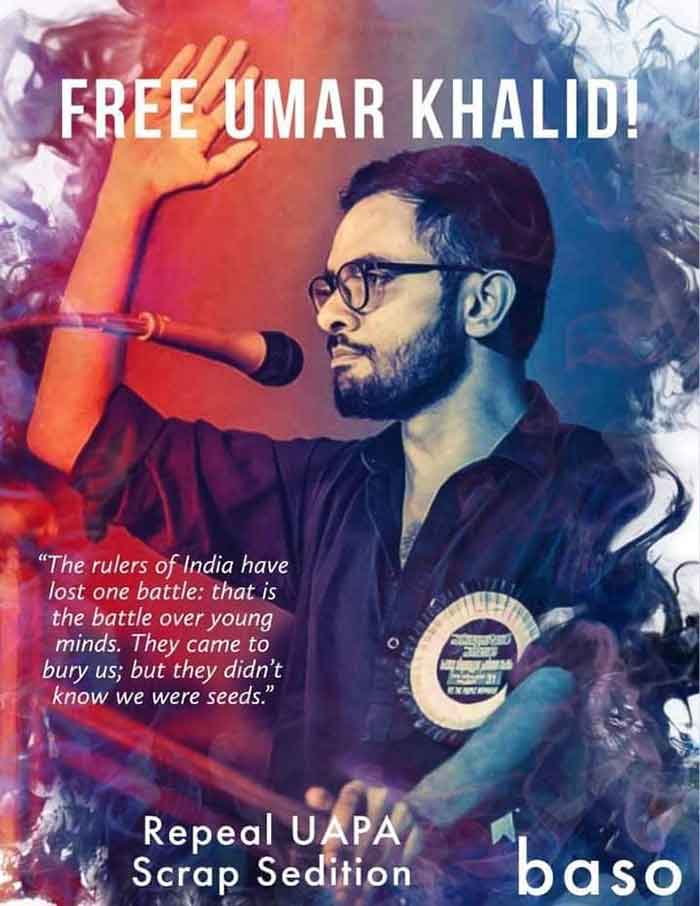
Modi has been often saying that we should convert crisis into opportunity. But instead of using it to enhance measures for fighting the Corona epidemic, his government has used it to terrorise the public. The scenes of migrant workers being punished by police are the glaring example of state terror and inhumanity towards the miserable citizens. Similarly the arrests of CAA/NRC protesters in Uttar Pradesh in December, 2019 in thousands, killing 21 persons but denying the same can give an idea as to how police power has been used to crush the voice of dissent. In Delhi riots of February 2020 the police not only connived with the attackers but now have made the victims as accused. All the social activists who participated in peaceful protests against CAA/NRC have been arrested and booked as conspirators and stringent law UAPA has been used against them. Even top leaders of political parties like Sitram Yechury of CPM, Yogindra Yadav of Swaraj India, social activist Harsh Mandar, Dr. Apoorv Nand and film maker Rahul Roy have been named in the charge sheet. Similarly a large number of student leaders and cultural activists of Jamia Milia and JNU have been incarcerated on false grounds. The recent arrest of Omar Khalid is an example of blatant misuse of police power.

From the above it can be seen that under Modi government India is fast becoming a police state. Normal laws are being made more stringent. The black laws like sedition, UAPA and NSA are being used profusely. The writers, Social activists, human rights defenders and opposition leaders are being implicated on trumpeted up charges. Unfortunately courts are also not coming to the rescue of the common man as expected. Police and other police agencies are being misused to punish the opponents or dissenters. Hence it is the high time that all those who believe in democracy and rule of law should join hands to stand against the onslaught authoritarianism and not allow our country to become a police state.  Since it is the outcome of political strategy of Hindutva forces it has to be encountered at a political plane.

SR Darapuri IPS (Retd.) National Spokesperson, All India Peoples Front


Sunday, 30 August 2020

The police I served and the police I faced

The police I served and the police I faced

SR Darapuri IPS (Rtd)


(I am a 1972 batch IPS officer of U.P.Cadre. After retirement as IG (Police) in 2003, I have been active on issues of Human Rights, Dalit Rights, RTI, Forest Rights Act, Right to Food and Education etc. I am the Vice-President of People’s Union for Civil Liberties, Uttar Pradesh. I am also ex- Advisor to National Commission for Scheduled Castes. At present I am National Spokesperson, All India Peoples Front. I have contested Loksabha election from Robertsganj (U.P.) constituency in 2014 and 2019. Our main work is among Dalits, Adivasis, Farmers and Contract Labour of Sonbhadra , Mirzapur and Chandauli districts of Uttar Pradesh. As a party we opposed the Citizenship Amendment Bill (CAB) and the Citizenship Amendment Act (CAA) because we believe they are discriminatory and against the Indian Constitution. We had decided to peacefully oppose the CAA in Lucknow on 19 December 2019.)

On the morning of December 19 last year, when I walked out of my house to go to the park, I saw a policeman standing outside the gate. He told me that his duty was to keep an eye on me at my home. Soon thereafter a police vehicle arrived with several policemen. After two hours or so, the police jeep left but policemen remained till 5 pm. I was  under house arrest without any reason.

I put a facebook post on my detention at home and later in the afternoon, when I learnt that there had been violence at the protest site, I updated the post and condemned the violence.

The next morning on December 20, shortly before noon, Circle Officer Ghazipur Deepak Kumar Singh and Inspector Vijay Singh arrived with several policemen and asked me to accompany them to the Ghazipur police station. I asked him if he was arresting me. He replied that I was to be taken to the police station. I thought this was preventive arrest under 151 Cr.P.C. and I would be set free in the evening.

At the police station, I was not allowed to meet or talk to anyone. When my wife called, she was told I was not there. She panicked and sent WhatsApp messages to senior police officers in Lucknow and put up a facebook post saying that men in uniform had taken me away but my whereabouts were not known.

Around 5.30 pm I was taken to Hazratganj Police Station by jeep. I asked Inspector Dhirendra Pratap whether I was under arrest. He teasingly said, “Yes, by now 39 have been arrested and you are the 40th.”

Around 8 pm a sub- inspector informed me that I was to be produced before a Remand Magistrate. I demanded then that I be allowed to call my lawyer. But permission to call my lawyer was denied and I was taken to the Remand Magistrate’s residence in River Bank Colony.

I was asked to wait outside but I forcibly barged in before the Remand Magistrate and informed him that on the day of the violence the previous day, I was under illegal house arrest from 7 am to 5 pm and I had not gone out of my house. I was picked up from home at 11.45 am and was being produced before him after 8 pm.

Asked by the Remand Magistrate about the charge against me, the SI replied that I was charged under Section 120 B IPC for criminal conspiracy. After listening to both of us, the magistrate refused to grant jail remand, rebuked the SI and said he would report him for taking punitive action against innocent people. He began writing on a sheet of paper and after some time I was asked to wait outside. Soon thereafter Inspector Hazratganj, Dhirendra Pratap Kushwaha arrived and went inside to speak to the magistrate. He was there for a long time but apparently did not succeed in persuading the magistrate to remand me to jail.

It was around midnight when we returned to Hazratganj PS. To my shock and horror, in the case diary they recorded that the Remand Magistrate was not available at home due to illhealth and hence the jail remand could not be obtained. The case diary also falsely mentioned that I was arrested from a park in the metropolitan area at 5.40 pm whereas I was taken away from my house at 11.45 AM. It was a chilly night. Lucknow gets bitterly cold in December. But when I asked for a blanket, policemen told me that they were under instructions of Lucknow SSP Kalanidhi Naithani and Inspector Hazratganj that no blanket be given to me.

I however picked up the mobile handset of the Munshi when he had gone out and called home, asking my son to bring me a jacket, a blanket and a cap. Around 2 am my son arrived and confided that he had come to the PS in daytime when police had threatened to arrest him also.

On December 21, I was detained at Hazratganj PS till 5.30 pm and taken to jail in a prison van. I was presented before a Remand magistrate around 7 pm. I repeated what I had told the previous Magistrate. But this gentleman paid no heed and signed on my 14-day jail remand.

He condescendingly told me, “You yourself have served in the police department. Surely you would be aware that this is how the system works”. I reached the jail barrack at around 09.30 pm.

I had not had my breakfast when the police picked me up from home on December 20 but I was given no food by the police till I arrived in jail. In the jail too I could not get any food on the night of December 21since it was late.

Surprisingly the investigating sub- inspector, Hazratganj, did not record my statement u/s 161 CrPC at any stage but wrote it out on his own.

I had not stepped out of my house on December 19, 2019 but have still been charged in case No. 600/2019 of Hazratganj police station u/s 147/148/ 9/152/307/323/504/506/332/188/435/ 436 / 120B, Criminal Law Amendment Act-7 dated 19/12/19. My name did not figure in the FIR but even then I was falsely implicated, arrested and sent to jail for 3 weeks.

Since I was totally innocent and the police failed to produce any evidence against me in the court, I was released on bail on 7/1/2020. Now a charge sheet has been filed in the court in which I have been described as the Master Mind of the conspiracy to instigate violence.

You can see that I had nothing to do anything with the violence which took place on 19th December at Lucknow during anti CAA protest but still I have been implicated on account of political vendetta against me. As you might have heard that Yogi Government had put up our posters/hoardings giving our names and addresses and amount to be recovered on account of damage to public property. It has exposed us not only to name and shame but also to personal attacks. Although Allahabad High Court directed the Yogi government to remove these illegally put hoardings but the state refused to comply with it even without getting any stay against High Court order from the Supreme Court.   In March I was served with a recovery notice to the tune of Rs. 64 lacs without my guilt being proved by any court. I filed a writ petition in Lucknow Bench of Allahabad for stay of recovery notice in the month of March but as usual after many dates no order has bas been passed so far. It may be mentioned that the recovery notice issued by Tehsildar Sadr, Lucknow is illegal because it has been issued under Sec. 143(3) which does not exist in UP Revenue Code.  In the meantime revenue officials have been raiding my house, threatening my arrest and seizure of my house property.

 This highhandedness and illegal action of the state has caused a lot of mental and physical harassment not only to me but also to my family. My wife aged 74 is suffering from co- morbidity (Liver Cirrhosis, Heart problem, Asthma and Diabetes) and is bead ridden. When I was in jail Priyanka Gandhi took all the trouble to come to my house to enquire about her health. I am thankful to her for this act of kindness. My grandson and grand daughter who are preparing for civil services have been highly disturbed. But I am happy that my entire family has stood behind me like a rock. As regards me I am already much tempered for all such ups and downs and I continue to work with full steam.

From the above you can see that if police can harass, engage in excesses and illegalities with a person who has been in the Indian Police Service for 32 years, you can imagine what they can do to an ordinary man.

Hence we can say that India is now a Police State with indiscriminate and arbitrary arrests and detention. What police says is the law. Facts no longer matter. This is a prelude to a fascist state which is fast emerging under BJP rule.


Nehru's India and Modi's India: Two Visions of Nation-Building and the Unfinished Project of Social Democracy

  Nehru's India and Modi's India: Two Visions of Nation-Building and the Unfinished Project of Social Democracy SR Darapuri I.P....