Monday, 26 October 2020

Dalits V/S Bahujan


Dalits V/S Bahujan 

-S.R. Darapuri I.P.S. (Retd) & National Spokesperson, All India Peoples Front 

For quite some time now, the word ' Bahujan ' has been used in politics instead of Dalits. According to the promoters of the Bahujan concept, the Bahujans include Dalits and Backward Classes. According to Kanshi Ram, Muslims are also involved and the number is 85%. According to their theory, the Bahujans should come together and take away power from 15% of the Savaranas (higher castes). However, this formula looks great and has great potential. But what is the basis of  Bahujan unity. Is it the formula of being Untouchable or Dalits and backwards or something else? Untouchables and Shudras are divided into innumerable castes and suffer from different caste pride. They suffer from Brahmanism as much as they emulate their behaviour towards Dalits. They have many sharp contradictions. Backward castes consider themselves  to be higher than Dalits and behave like that. At present, most of the atrocities on Dalits are being committed by backward castes rather than upper castes. Most of the Dalits are labourers and the economic interest of these newly wealthy castes is hitting the labourers. That is why these castes persecute Dalits for wages. In such a situation, on what basis can unity be established among Dalits and backward castes? On the one hand there is a social distance and a conflict of economic interest on the other. So being downtrodden and backward or Untouchable and Shudras cannot be a mere formula of their unity. Even if there is any unity in political selfishness, it cannot be permanent as has been seen in practice.  

Now, if the class analysis of Dalits and backward is done, it is found that even within the Dalits, the affluent and the poorer sections have been created. The difference between the backward classes and the most backward classes within the backwards is very clear. For some time now, the affluent sections of the downtrodden and backward classes have taken advantage of economic growth and gained political power sharing. Contrary to this, the majority of Dalits and backward classes are still very backward. The most downtrodden and the most backward classes are talking about this division. It is also evident from this that the concept of Bahujan is only an aerial concept . Similarly, there is a division of Ashraf, Azlaf and Arjal within Muslims, which is being exposed by Pasmanda Mahaz (Backward Muslim).  

Now the question  arises what can be the real formula of unity within these sections. The above analysis clearly shows that there are two  classes within Dalits, backwards and Muslims who have different economic and political interests and also have sharp contradictions and points of clash. So far, the dominant section of these sections has been leading the entire caste/class and community in the name of caste and religion, and this section has taken up whatever economic and political benefit of development. This has intensified caste/class division and conflict within them. Various political parties have been taking advantage of this caste/class divide, but no party has identified the real issues of these classes nor done anything for the upliftment of them. Recently, the BJP has collected  them in the name of Hindus and got their votes. If we see, this class is socially, economically and politically backward. The real uplift of these classes can only be done by raising issues related to their backwardness and making  policies to resolve them. So, the real unity of these can be created only on these issues and not on caste and religion basis. If viewed in terms of economic and political interests, these classes are natural allies because their problems are the same and the struggle for their liberation is the same. Under the umbrella of the Bahujan, the issues and interests of the most backward section are overshadowed.  

Therefore, in order to establish a strong unity of these most backward sections, issues relating to social, economic and political backwardness should be raised instead of the artificial concept of Bahujan based on caste/denomination. The politics of caste and religion strengthens Hindutva. With this objective,  All India People's Front (AIPF) in its agenda under social justice has included: (1) separation of quota of backward Muslims from OBCs, amendment to Section 341 to include Dalit Muslims and Dalit Christians in the Scheduled Castes. Implementation of the recommendations of Sachar Committee and Ranganath Mishra Committee; (2) Reservation quota for most backward Hindu and Muslim castes out of 27% OBC quota; (3) Restoration of reservation in promotions at the earliest; (iv) Filling up of vacant Government posts of SC/ST quota by lauching special drives; (5) Reservation to Dalits, Adivasis, OBCs and Most Backward Classes in the private sector also; (6) Grant of tribal status to tribal castes like Coal of U.P.; (7) Issues relating to strict enforcement of Forest Rights Act and (8) making employment a fundamental right, etc. In addition, stringent action should be taken to prevent communalism and terrorism. There has also been a demand for fast-track courts to hear communal violence cases. In view of giving preference to these sections, the party has reserved 75% posts for Dalits, backward, minorities and women in its constitution. The AIPF is trying to enhance the issue-based politics in place of caste-based politics of the Bahujan, as directed by Dr. Ambedkar. 


Sunday, 25 October 2020

BELOW THE BOTTOM RUNG- Beverley Nicholas


BELOW THE BOTTOM RUNG- Beverley Nicholas
 A book worth reading by all. It contains a full chapter III on Dr. Ambedkar and his interview by the author. Although costly but cheaper in kindle version.Verdict on India
                                            CHAPTER III
                            BELOW THE BOTTOM RUNG
‘A MAN of about fifty. Waiting for me in a wicker chair on the veranda of his house. Bulky, dynamic. Very charming manners, but nervy, inclined to fiddle with his shoe-laces. Seemed to be on his guard, as though ready to parry taunts from all directions. Well, after all it’s only to be expected . . .’ So runs an extract from my diary. The man is Doctor Ambedkar. And in a moment we shall see why it is ‘only to be expected.’ Ambedkar is labour member in the Government of India, and one of the six best brains in, India. He is of the Cavour school of statesman—an implacable realist. When he speaks in public he is galvanic, creative, and almost embarrassingly to the point. To compare the average oration of a Congress politician with a speech by Doctor Ambedkar is like comparing a Hindu chant with a fusillade of pistol shots. As a result, he is one of the best hated men in India. And why is it ‘only to be expected’. . . . this nervousness, this suggestion that he would be ready to take offence? Because Dr. Ambedkar, in the eyes of most of the 180 million caste Hindus, is ‘untouchable.’ A person to bring pollution if his Mayfair dinner-jacket should happen to brush against their dhotis. A creature from whose touch the extreme orthodox must fly as though he were a leper, a monster whose slightest contact compels them to precipitate themselves into the nearest bath-tub, to soap and pray, and pray and soap, and soap and pray, so that the filth of Dr. Ambedkar—(M.A. London)—the shame of Dr. Ambedkar—(high honours at Columbia University)—the plague and scourge of Dr. Ambedkar—(special distinction at Heidelberg)—should be washed for ever from their immaculate and immortal souls. We are not talking of the past, but of the year 1944. These are not legends, fairy-tales, gipsy songs; they are news paragraphs, stop-press. Untouchability—history’s most flagrant example of man’s inhumanity to man—is still deeply rooted in the Hindu social system; nearly all attempts to abolish it have met with failure. If a ten per cent improvement has occurred in the last fifty years, that is an optimistic estimate. A large number of people in England and America, deluded by Gandhi’s propaganda, imagine that this disease—for what else can we call it?—is on the wane. They have read with approval the Mahatma’s denunciations of it, they have seen photographs of him with his arm round the shoulders of the outcasts, and they know that he gave the title of ‘Harijan’1 to his own newspaper, which circulated among the high and might of the land. ‘Surely,’ they say to themselves, ‘such a powerful example; in these enlightened days, must be having some effect?’ It is not. As for Gandhi being the untouchables’ friend, let us listen to Dr. Ambedkar, who is their undisputed leader. He said to me: ‘Gandhi is the greatest enemy the untouchables hate ever had in India.’ A little knowledge of recent history is necessary in order to understand this accusation. But first let us refresh our memories with the theory of untouchability, and then illustrate that theory with a few facts. II As Macaulay’s schoolboy would tell you, there are four main castes in the Hindu religion. At the top come the Brahmins, hereditary holy persons, but without a church. The stormy and brilliant Nehru, whose autobiography was a best-seller on both sides of the Atlantic, is a Brahmin, and it is wise never to forget it. It weighs a great deal more heavily with him than the fact that he was educated at Harrow and Cambridge. C. R. Rajagopalachari, ex-President of Congress, and the chief link between the Extremists and the British, is also a Brahmin. So is Pandit Malaviya, the leader of the extreme right wing of Hinduism. So are most of the Congress bigwigs. The Brahmins might be said to play the same role in India’s political life as the old Etonians in Britain. The main difference is that they have no organized labour to keep them in order. By and large, they are masters of all they survey—except when they turn round and take a look at the Muslims.1 The three other castes are the Kshatriyas or warriors, the Vaisyas or traders—(Gandhi is a Vaisya)—and the Sudras, or cultivators and menials. Way off in the outer darkness, sunk deep in the mind, are the casteless ones, the untouchables, nearly 60 million of them. This classification is drastically simplified. There are actually 2500 castes, all with their taboos, their social restrictions, and their almost incredible ingenuity in complicating the most simple process of life. These castes split the Hindu fabric into a sort of crazy quilt, lacking all homogeneity, held together only by fear—fear of each other, fear of the Muslims, fear of British law. Over and over again it must be emphasized that these castes are a matter of modern, not ancient history. A homely little instance may sometimes make a point more vivid than any amount of statistics; here is one. Not long ago I spilt a bottle of iodine on the floor of a flat where I was staying. I had nothing to wipe it up with, and I called for a servant to ask him if he would kindly get a rag and remove the stain. There were five servants in the flat and they had nothing to do; it seemed a reasonable request. It was not granted. One after another they came in, regarded the stain, and departed, with black looks. Losing my patience, I went to the kitchen, found a rag, and wiped the thing up myself. ‘What is the matter with you all?’ I demanded, when I handed back the rag. They explained that Dido, the sweeper, the untouchable, was out having his lunch, and only he could wipe up the stain. They would be degraded if they did it themselves, and he—Dido—would lose respect for them if he heard about it. Heaven knows, this may sound a trivial instance, but when you multiply it by millions it ceases to be trivial; it becomes a major problem, not only for India but for the whole democratic world. III Very briefly, let us consider the life of the untouchables. It is largely a matter of negatives. They may not use the public wells, which means that they are condemned to drink any filthy liquid they can find. Their children may not enter the schools; they must sit outside, whatever the weather, even in the monsoon. They may not go near the bathing places. Hence, through no fault of their own, they are usually unutterably filthy. The temples are closed to them. This is the unkindest cut of all, for if you take away their faith from a people so sunk in misery, you take away the only consolation they have. Admittedly, one or two dramatic gestures have been made in the past few years, by enlightened rulers and statesmen, who have thrown open temples to all comers. But what happens? As soon as the untouchables flock in, the orthodox flock out. The temple becomes an ‘untouchable’ temple, it is tainted, unholy, and as such it ceases to be an object of reverence even to the untouchables themselves.1 Among other restrictions, the barbers may not cut their hair, nor the washermen wash their clothes. One thing they can do is to tend the earth closets and carry away the night soil from the villages. This they do in large wicker baskets, which they put on their heads. The baskets leak, and the untouchable is not a pretty sight when he, or she, has finished the job. Still—say the Hindus—it is their own fault; they are paying for the sins of a previous incarnation; why should we have any pity for them? A convenient doctrine, if you happen to have been born in the right bedroom. “Ah, this is very old stuff,” you may say. ‘Of course it is,’ we answer. ‘And it is also very new. It is as old as the hills and as new as the morning dew. It is a long way B.C. and it is also A.D. 1944.’ Let us have a few more examples from personal experience. Slight though they are, they may help us to realize the bitter struggle which these 60 millions must make for the most elementary decencies, a struggle which is being carried on as you read these words.
IV
SCENE ONE. A bungalow on a small island lying a few miles off the west coast. We have just finished dining on the veranda and a British subaltern joins us for a drink. He has walked up the hill from the seashore, where is he in charge of a training camp for young Indian engineers. He looks tired and depressed. ‘Had a trying day?’ ‘Pretty sticky.’ He flings himself into a chair. ‘Trouble with recruiting.’ ‘Aren’t they coming in fast enough?’ ‘Oh—they’re coming in all right. But I have to send ’em away again. Look over there.’ He jerks his thumb over his shoulder. We see two young Indians standing in the shadow of a eucalyptus tree, staring at the dust. They are of exceptional physique, and they are spick and span as though they were dressed for a party. ‘See those chaps? Well, they’re two of the best who’ve ever come my way, physically and mentally. Well above standard. They want to join my lot; I want to have them; and I can’t.’ ‘Why on earth not?’ ‘Untouchable. Sweeper class.’ ‘But that’s preposterous!’ ‘Of course it is. But it’s India. My men would just down tools if I took ‘em on.’ ‘But surely,’ I exclaimed, ‘you’ve got some authority as their commanding officers?’ ‘No, I haven’t. Not in a thing like that. Why, the very rumour of those chaps coming has caused a hell of a row all day—desertions, insolence, insubordination. I had to give in. I don’t want to start another Indian Mutiny.’ He swallowed his drink and, sighed. ‘Sounds silly, I know,’ he said, ‘but the worst of it was that one of the chaps cried. Said I’d broken his heart. Me! It’s pretty grim when a chap like that starts crying.’ He laughed uneasily. ‘Maybe I’m well shot of him—maybe he was a cissy. Oh, what the hell, anyway.
1 SCENE TWO. A village in a remote part of the south-west. I have come to see a temple which is reputed to be of great beauty. The expedition is not a success; the temple is devoid of any architectural interest and is only notable for the astonishing obscenity of the phallic scenes which are carved round its base. This has a curious affect on an American lady who is also going the rounds. Acting on the principle that evil, like beauty, is in the eye of the beholder, she decides to put on a bold front, and drags me round the building, prodding her umbrella at the most abandoned exhibitions and trying to treat them from a purely aesthetic point of view. We came to one scene where everybody was so upside down and inside out that it should have been labelled ‘Sex in the Gymnasium.’ She regarded it with a cold, unblinking stare. ‘Definitely the Jain influence,’ she proclaimed, with a ring of challenge. I had never heard it call that before. Having digested the obscenities, I was at a loose end. The lady took her leave as it was very hot, and she was obviously exhausted by her unwonted championship of the Religion of the Red Light. But I wanted to explore the village, so I left her sitting in the shade of the temple, silhouetted in lofcy isolation against a back ground of ape-like ecstasies. I came to a big mad hut. It was the village school. I peered through the window. About a hundred little boys were squatting on the floor, gazing at a blackboard on which a young man was tracing letters in Canarese. They made the prettiest picture—the rows of dusky faces and the snow-white eyes turning from right to left, like marbles rolling on a dark cloth. I drew back my head from the window and strolled round the corner of the building. And there, to my surprise, were twelve little boys, sitting on a bench, huddled together as though they were frightened of something. ‘What are those little boys doing? Are they in disgrace or something?’ The young Hindu guide answered me. ‘They are of the Scheduled Classes,’ he said curtly. I stared at the little boys, who had huddled themselves closer together. They were thin and almost naked and none too clean, but they were little boys, after all. Each of them was ‘somebody’s bairn,’ as one might say, if one were sentimental and Scotch. Perhaps one should have kicked up a row about it. Those kids were supposed to be allowed into the schools. They had passed all sorts of laws for their protection in this State. But what could one do? If one reported the matter it would only get the teacher into trouble, and it probably wasn’t the teacher’s fault. He looked a decent sort of chap even though he was half starved on his 25 rupees a month. It was more likely due to the parents of the children inside. So I walked away and left the little outcasts to their fate, straining their ears towards the window, listening to the teacher’s voice. Now and then one of them would scribble something in a tattered notebook. Young India, getting education.
SCENE THREE. A dinner table in Peshawar. Dramatis personae, Pandit Malaviya and B——, one of the leaders of the opposition in the legislative council. The year is 1933, and Peshawar is full of bustle and excitement, for there is a great conference in full swing, which will settle the fate of the Hindu-Sikh minorities. The venerable old Pandit is being entertained by B——, and they are both anxious to please each other. But the dinner party is not a success. Why? Because the Pandit cannot eat. Why? We shall see. B——had taken a great deal of trouble about this dinner. He knew that the Pandit was a vegetarian, and so he provided only fruit; moreover, he chose only such fruits as Nature had ensured from outside pollution, such as oranges and bananas. And he had been even more careful than that. He had bought on entirely new dinner service; for he was aware that if the Pandit were asked to eat off a plate which might once have had meat on it, the worst would happen. The Pandit would be horrified beyond measure; he would never feel clean again. So there we are. Fresh fruit, covered with thick skins. New plates, never used before. Old gentleman, anxious to please host, staring at banana or whatever it is. All to no avail. He cannot eat the banana. Sometime, somewhere, somehow, somebody might have touched something, and made it unclean. He dare not risk it. He is a brave old man but he is not as brave as all that. So the demands of courtesy must be set aside. The dinner, we repeat, was not a success. This story has been told flippantly, because at first sight it falls into the category of farce. But is it entirely farcial? Malaviya, at the time, was leader of Congress. He was, and still is, one of the most powerful personalities in India. He is the sort of man who, if and when India gains independence, will help to represent his country at international conferences. To put it mildly, his extreme orthodoxy may tend to slow up the business of the day. Supposing that we translate this situation into Western terms. Imagine a conference between Churchill, Roosevelt, Stalin and Chiang Kai-Shek on orthodox Hindu lines. What would happen? Well—most of them would be popping in and out of the bathroom during the greater part of the proceedings. Churchill would sign a document with the same pen as Roosevelt and would rush to have a shower. Stalin would inadvertently drink a cup of tea handed him by Chiang Kai-Shek and hurry away to gargle. Roosevelt would constantly be calling for a flit spray, and if anybody ever got any business done it would be such a miracle that half the war debt would have to be sacrificed on the altar of Krishna. Nevertheless, Malaviya, in spite of these-foibles, is entitled to our respect. Extreme Hindu as he is he has fought the battle of the untouchables, and admitted hundreds of them into the Hindu fold. That proves that his heart is very much in the right place, for only a deep love of his fellow-men could make him challenge the faith of his fathers. He starves himself for that faith, and yet he takes up the eudgels for those whom the faith has made pariahs. It would be ungenerous to deny that he comes out of this story pretty well.
V
We left Dr. Ambedkar, leader of the 60 million Untouchables, proclaming that . . . ‘Gandhi is the greatest enemy the Untouchables have ever had in India.’ This will come as a violent shock to most people. Gandhi has ceaselessly proclaimed his detestation of untouchability. He has untouchables in his ashram, he has adopted an untouchable child, and he has declared, ‘I would rather that Hinduism die than untouchability Live.’ This often-quoted remark, by the way, does not really make sense. Untouchability is as integral a part of the Hindu faith as anti-semitism of the Nazi; begin by destroying untouchability and you will end by destroying all caste. And caste is the only cement which saves the incredibly complicated Hindu structure from collapse. None the less, Gandhi was probably sincere when he spoke. So what did Ambedkar mean? We can best explain it by a parallel. Take Ambedkar’s remark, and for the word ‘untouchables’ substitute the word ‘peace.’ Now, imagine that a great champion of peace, like Lord Cecil, said, ‘Gandhi is the greatest enemy of peace the world has ever had.’ What would he mean, using these words of the most spectacular pacifist of modern times? He would mean that passive resistance—which is Gandhi’s form of pacifism—could only lead to chaos and the eventual triumph of brute force; that to lie down and let people trample on you (which was Gandhi’s recipe for dealing with the Japanese) is a temptation to the aggressor rather than an example to the aggressed; and that in order to have peace you must organize, you must be strong, and that you must be prepared to use force. Mutatis mutandis, that is precisely what Ambedkar meant about the untouchables. He wanted them to be organized and he wanted them to be strong. He rightly considered that the best way of gaining his object was by granting them separate electorates; a solid block of 60 million would be in a position to dictate terms to its oppressors. Gandhi fiercely opposed this scheme. ‘Give the untouchables separate electorates,’ he cried, ‘and you only perpetuate their status for all time.’ It was a queer argument, and those who were not bemused by the Mahatma’s charm considered it a phoney one. They suspected that Gandhi was a little afraid that 60 million untouchables might join up with the 100 million Muslims—(as they nearly did)—and challenge the dictatorship of the 180 million orthodox Hindus. When such irreverent criticisms were made to him, Gandhi resorted to his usual tactics; he began a fast unto death. (As if that altered the situation by a comma, or proved anything but his own obstinacy!) There was a frenzy of excitement, ending in a compromise on the seventh day of the fast. The untouchables still vote in the same constituencies as the caste Hindus, but a substantial number of seats are now reserved for them in the provincial legislatures. It is better than nothing, but it is not nearly so good as it would have been if Gandhi had not interfered. That is what Dr. Ambedkar meant. And I think that he was right.
VI
What of the future? It depends very largely on the British. If we knuckle under to Congress demands, the state of the untouchables will remain either stationary or deteriorate. And it cannot be too often emphasized that even if it remains stationary it will still be quite intolerable. In spite of the much vaunted ‘new approach,’ in spite of Gandhi’s soulful proclamations, how many untouchables have managed to obtain university degrees? Five hundred! Five hundred, in the whole history of Indian Education, in a country with a population of nearly 400 million! Congress, dominated by the Brahmins, has no intention of changing this situation. It is highly significant that by far the most sweeping measures to improve the lot of the untouchables have been made in the States where the Congress writ does not run. Mysore, for instance, could set an example to the whole of India.1 If we give way to Congress, the untouchables might as well run to the nearest village well and hurl themselves into it en masse. They are forbidden to use it in life; they might as well use it in death. Ambedkar said to me that the Cripps proposals ‘would have dealt a death blow to our interests.’ Some people challenge Ambedkar’s right to leadership. They would not do so if they had ever attended any of his meetings, such as the great rally at Nagpur where 75,000 untouchables acclaimed him with a fervour that even Gandhi might have envied. Besides, even if he had any competitors—which he has not—his clear-cut, creative ideas demand the support of all men of decency and sense. We will end this random survey by a few sentences from my diary which throw light on those ideas. Ambedkar said to me: ‘The keynote of my policy is that we are not a sub-section of the Hindus but a separate element in the national life.’ ‘Gandhi says to us “Trust us—trust the caste Hindus!” I reply, “We will not trust you, for you are our hereditary enemies.” ’ ‘In every village there is a tiny minority of untouchables. I want to gather those minorities together and make them into majorities. This means a tremendous work of organization—transferring populations, building new villages. But we can do it, if only we are allowed.’ ‘We are as staunchly nationalist as any of the Congress. But we do not want the British to quit India till our rights are safeguarded. If they do, our fate will be more terrible than the fate of any of the Oppressed peoples of Europe.’ Can any sane man doubt to whom we ought to give our support? To Gandhi, the caste Hindu, who would fast, unto death rather than grant these 60 million outcasts the right of uniting into an independent organization which might challenge him? Or to Ambedkar, who has himself risen from the depths, and fought his way through a ceaseless barrage of insult and superstition, to emerge triumphant as the champion of his people? It is not always, in British history, that the path of honour is identical with the path of self-interest, but that is the situation in India to-day. There is only one path that we should tread, for our own sake, and for the sake of the underdog. Let us hope that we tread it. 1 Harijan really means ‘Child of God.’ It has come to be associated with the untouchables. The Government of India’s name for them is ‘Scheduled Classes.’ 1 The Brahmins, in spite of their lofty position, have not attracted much love to themselves in the long history of India. And ancient saying, still current, is ‘if you meet a snake and a Brahmin, kill the Brahmin.’ Perhaps this is due to the preposterous nature of their claims. For example, Manu, maker of laws, ruled that to accuse a Brahmin of a crime was sinful even if the Brahmin was guilty. 1 The classic example of this tendency was afforded by the great temple at Madura, 300 miles south of Madras. Premier Rajagopalachari went so far as ordering a government official to lead a group of untouchables into the temple. The great majority of Brahmins have refused to set foot in it ever since. 1 This story could be multiplied ad nauseam. However, it is worth noting that the Army, once it has got hold of a man, is proving a powerful instrument in undermining the extreme caste system. Discipline, comradeship, and above all a common sense of danger shared, have worked wonders in the present war. When the boys come marching home, we may look out for fireworks. 1 The student who would like to know what can be done by a benevolent and enlightened ruler should read Harijan Uplift in Mysore, published by the Government Press, Bangalore.
 
Nichols, Beverley. Verdict on India. Read Books Ltd. Kindle Edition.

amazon.in

Monday, 28 September 2020

How To Counter The Hindutva Project?


Along with broader movement against the authoritarian project of RSS and BJP, emphasis must be laid on politicisation of society and balance of social forces must be changed

 https://countercurrents.org/2020/09/how-to-counter-the-hindutva-project/

Recently, senior journalist Santosh Bhartiya interviewed me on the contradictions of left movement. Responding to his question, I said that for me left movement in India is a democratic movement which stands for democratisation of state and society. I also said that call it irony of history or tragedy that the three major streams of democratic movement could not evolve mutual political understanding for a broad political coalition. Coming together on a common political platform of CPI formed in 1920, CSP (Congress Socialist Party) led by Acharya Narendra Dev, also based on Marxist philosophy and Independent Labour Party like streams formed by Dr Ambedkar was very much needed. At least after independence, in my view, it was primarily responsibility of the Communist Party to form such a political platform as it was strongest in terms of mass base and organisation, compared to other democratic formations.

I also said that to portray Gandhi as a revivalist against modernity or he was opposed to land reforms is not true as objective reading of history. We must understand that the ideas of Gandhi were continuously evolving. The ideas which Gandhi expressed in Hind Swaraj in 1909 had changed a lot by 1948. In his talk with Louis Fischer, an American journalist in 1942, Gandhi said that peasantry will take the land of landlords. When he asked regarding paying compensation, he replied, how that can be given. When Fischer asked him regarding violence in 1942 Quit India movement, Gandhi didn’t answer. He was very clear about the form of struggle. While accepting his differences with Subhash Chandra Bose, he regarded him as the greatest one among all patriots. In fact, the first and foremost agenda before Gandhi ji was how to liberate the country. He wanted ouster to British ruling class at any cost. He even said that let them go and even if it means anarchy for some time, we are ready for that. Gandhi very well understood the divisive politics of British colonialism. He laid maximum emphasis on Hindu-Muslim unity. He made all efforts to avoid partition till end. After partition, he advocated brotherly relations with Pakistan. It was his earnest desire that there should be a relationship between India and Pakistan like two civilised nations. His vision was clear regarding religion too. The religion which he advocated was universal moral values. So far as practicing religion like Hindu, Muslim, Sikh, Christian and Parsi were concerned, he regarded these religions as a matter of personal faith and belief. By all these I mean to say is that Gandhi ji’s vision about independent India was in many ways similar to Dr. Ambedkar’s “The State and Minorities” as well as programmes of the Communist and Socialist parties.

Although there are no ifs and buts in history, still, if we want to discuss formation of a broader political platform against the challenge posed by RSS and BJP which is being actively supported by finance capital, we have to evaluate the history. As there was very favourable and to some extend dominance of socialist ideas during freedom struggle and afterwards, I believe that there was an underestimation of the inherent potential of development of productive forces in capitalism. Communist movement though accepted democratic revolution as a necessary stage before socialism but for the life of this interim period, there was no clarity about this as it was thought a short lived phase of development. That is why there is less emphasis on developing organisation, policy, politics and slogans suited to that political juncture. Instead of giving much emphasis to socialism the time was to discuss alternative democratic model of capitalism based on peasant path of development.

Anyway, the forces of democratic movement remained scattered and could not develop an effective opposition, as a result Congress got free hand to rule the country. In these circumstances, Congress Party which was supposed to carry forward India could not play the desired role. The provincial Congress governments formed during 1937 to 1939 period were anti-people, corrupt and communal. Pandit Nehru became PM and he played an important role in the modernisation of India but the umbrella like form of Congress and it’s capability to accommodate various progressive ideologies gradually collapsed and there emerged a rightist consolidation within Congress. Pt. Nehru failed to resolve the vital issues like communalism, border dispute and democracy. Within Congress, there was always a tendency of Hindu preference and gradually, it has been retreating from fundamental change in society. So, despite accepting Nehru’s role in modernisation of India, we must keep in mind what Acharya Narendra Dev founder of CSP had said that Congress was not ready for fundamental and basic changes.

During Indira Gandhi’s rule, Hindu preference was gradually replaced by Hindu supremacy and in 80s Congress was openly complicit with the Hindutva politics of RSS and BJP. During Narasimha Rao government, the anti-people, communal and corrupt face of Congress was thoroughly exposed. The role of the central government in Babri Mosque demolition also became explicit. Before this, Congress was already badly exposed in anti-Sikh massacre 1984. This government had a big role in the horse trading of parliamentarians, ever-increasing corruption and degeneration of parliamentary politics. Also during this regime, Nehruvian mixed economy was rejected as quota-permit raj and the government completely surrendered before neo-liberal economy. Till today all sections of the society are suffering from its ill-effects and now people have started raising voice against it in various forms. The direction of these movements is against corporate and finance capital.

Broadly speaking in 2004, Manmohan-led UPA government proved to be a government which continued old policies of Congress in other forms instead of being a government of secular values and welfare policies. It further advanced the pro-American foreign policy, intensified privatisation under liberalisation, enacted UAPA like draconian act, and continued repression over all sections of the people. Its alliance with left front for some years was sidelined. Manmohan government was thoroughly defamed for corruption and it paved the way for the formation of BJP alliance led government. After set back in the front experiment with Congress, Left Front has withdrawn for the time being from political front formation at national level with the Congress or regional parties.

Regarding national freedom movement, I want to point out on one issue that sufficient attention was not paid to the danger posed by Hindutva thinker and political activist Vinayak Damodar Savarkar and RSS ideologue Golwalkar who played sub subservient role to British imperialism against national movement. Their ideology was committed to disenfranchise a large population in the name of Father-Land and Holy-Land. In its pursuance, Modi government has enacted CAA. Despite being fully aware about the dangers of majoritarianism, Pt. Nehru appointed Shyama Prasad Mukherjee as the Cabinet Minister in his Interim government. It was Shyama Prasad Mukherjee who after resigning from Nehru cabinet joined hands with RSS to form Jan Sangh. Now, someone justifying Nahru may say that it was done under pressure of the then prevailing conditions. But, mistake will remain a mistake. After independence, political experiments of Dr. Lohia and JP to combat Congress made cause with the Jan Sangh providing legitimacy to the politics of RSS. Whichever government was there, since supporting VP Singh government in the 90s up to 2014, BJP and Sangh kept deepening their roots in the society.

Regarding Anna movement and AAP leadership, Prashant Bhushan’s acceptance with regret that RSS and BJP played role in propping up the movement, is very important and a lesson for others that one must understand RSS-BJP tactics to infiltrate various movements for their own cause to disrupt the movement. Today, people’s discontent against Modi government is rising and RSS people will try to infiltrate into anti-government agitations in various forms as they once did by forming Swadeshi Jagran Manch and later joining Anna movement.

So far as Communist movement is concerned, debates regarding characterization of state, united front and parliamentary democracy still remain. In the 90s, instead of developing left-democratic confederation incorporating different levels of democratic forces and the movements, the experiment of mainstream Left to form National Front with regional parties and run the government, failed both at policy level as well as at the level of practical politics. It failed to check the rise of the BJP.

RSS has still not succeeded in forging pan Hindu unity, but the illusion of Mandal politics in combating BJP is completely shattered. Modi government is now speedily implementing Hindutva agenda which Sangh could not get implemented during Atal government. After defeat of Atal government in 2004, Advani went ahead with a so called liberal face knowing the limits of sectarian politics in electoral arena. For this purpose he utilised occasion of his Pakistan visit and declared there Jinnah to be secular which was contrary to Sangh thinking. Here, he made mistake in understanding RSS mood and motion of finance capital. He lost BJP leadership in the same manner as he had once captured it on Ram temple issue from Atal Bihari Vajpayee’s so called Gandhian socialism.

Modi government is a government of Hindutva and Corporate nexus. To divert attention from the primitive accumulation through loot of minerals and natural resources, Manmohan- Chidambaram government termed Maoism as biggest threat to internal security of India. In Modi government, so called Islamic terrorism is also added to it. In fact, RSS has already been describing Islam, Christianity and Communists as its three big enemies in the country. For finance capital, welfare state is a danger, so liberalism is also target of this nexus. Finance capital is dangerous for environment and nature on the one hand, while on the other hand it has broken the backbone of workers, peasants, and trade, small and medium enterprises. Under black laws, Sangh is sending its ideological-political opponents to jails, declaring them anti-national. Modi government is running this organised campaign of loot and repression. Repression is increasing on Dalits, Adivasis, minorities and women. Modi government has extremely weakened all democratic institutions from within and it is working overtime to convert them into authoritarian institutions. Even changing the character of the bill, passing bills by all sorts of manipulations, coercion, misuse of higher positions of the parliament has become hall mark of Modi regime. In fact, democratic institutions are being given authoritarian shape. So called liberals occupying higher positions in the parliament are getting exposed and a new phase of the degeneration of parliamentary politics in naked form is coming to the fore. Executive and bureaucracy, still broadly run with British laws, remain institutions of repression. Rejecting administrative autonomy, which was recognized till date, some bureaucrats in higher position are now functioning as RSS and BJP cadres. Many outgoing administrative and military officers are conducting campaign against democracy; they are busy competing in jingoist propaganda at various channels. War-mongering has become synonym to patriotism for them.

Judiciary, particularly Supreme Court (SC), which owes responsibility to safeguard democracy and Constitution, has compromised with government in many of its misdeeds. Two years back, press conference by sitting SC judges is proof enough of the fact how democracy is being throttled in SC. Now, it has become crime to express opinion about courts. Anyway, this institution is vitally important in defending Constitution and parliamentary democracy, hence battle for its democratisation and making its functioning transparent is very much necessary.

In totality, one can say that India is passing through a phase of an unprecedented challenge where there is danger, not only for Indian Constitution and democracy but also for Indian culture and civilisation. Politics of opposition against Modi government has become visionless and compromising. Congress and regional parties have compromised with majoritarianism and finance capital. Character of their governments, too, is undemocratic and autocratic. There seems to be no policy difference with Modi government and their politics. So, one shouldn’t harbour any illusion regarding their role for protection and extension of pro-people policies and democratic rights. Their role comes into display in symbolic political protests inside as well as outside parliament and in elections against BJP alliance. In this situation, it is imperative to think over the immediate and long-term role of alternative politics, politics of alternative or which I call people’s politics.

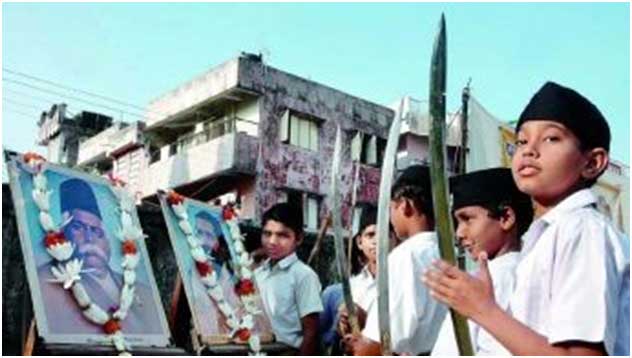
Today, we are fighting against such a philosophy, ideology and politics, whose lumpen army terms Gandhiji’s assassination as a slaughter of Gandhi! The author of “I am a troll” says that PM poses for photographs with his trolls army and encourages them. Modi government’s minister garlands lynch mob criminals. Even earlier RSS used to organise group worship of arms. So, today’s political situation can’t be compared with Emergency that was a black chapter of parliamentary politics, a horrifying event. But, behind today’s repression are the Hindutva philosophy and the idea of an authoritarian political system which doesn’t even believe in Indian Constitution and parliamentary democracy.

Today, we have entered in a phase of finance capital hegemony world over. In India, finance capital firmly stands with Hindutva politics. People know about the large sums of one-sided donations given to BJP by domestic and foreign corporations through electoral bonds. RSS and BJP have maintained their hold over the social structure. But, here, all contradictions of society are sharpening under Modi regime. The protests visible so far in the civil society movement, are now spread to peasantry, workers and youth movement. In coming days, all these movements will be further intensified, so these movements should not be left in spontaneity, but must be channelized towards systematic people’s politics. Defeating the politics of RSS and BJP and defeating BJP alliance in elections must become national task. This national task does not prohibit Left and democratic forces from independent participation in elections.

We must discuss some political realities of this phase. It is true that movements are rising against Modi government. Civil, social and Ambedkarite Dalit movements are forcefully opposing repression but these streams have no political presence. At this juncture, these movements must redefine themselves and accept the challenge facing the country. The forces of alternative politics associated with the ideas of Gandhi, Lohia and JP should also think over their political orientation. I mean regarding the mainstream Left, it is true that Left Front governments did compromise with finance capital in the name of developing productive forces and suppressed the voices of protest. But, one must make distinction between party and its government and Left parties, so far, have not accepted neo-liberal economy. Left movement is integral part of democratic movement and it has got political presence. It is also true that main streams of left movement don’t take interest in the formation of Left-Democratic Front. But, they take part in class-sectional movements on democratic issues, be it peasant, youth or working class movements. They are interested in environmental movement, too. There is a need of political dialogue with them because they have a committed history of battle against RSS and BJP. If all these streams come together on a political platform, which I call multiclass party, then a formidable resistance force may emerge against authoritarianism in Indian politics. Here, I don’t agree with those who think that this task is impossible and terming politics as the art of possible, advocate politics of manipulation. In such a platform, all democratic, Left groups, individuals, movements, people from oppressed caste, communities and victims of regional imbalance may join. Organic relations will develop among them; this may become an effective political platform. Pre-independence Congress, Chinese Kuomintang party, African National Congress have been witness to such experiments.

This people’s politics must compete with the ruling class’s politics and participate in day to day political activities. At any cost, its independent political position should not be diluted. After formulation of political programme, organisation building must be accorded top priority. Masses must be educated about the character of state structure working in a particular class interest. One must integrate with the masses. Despite accepting the importance of propaganda network, it is clear that twitter, facebook, whatsapp and courts will not decide the course of history. People and its class conscious party are the only decisive element of the history and we have to strengthen that.

In my view, today’s main problem is not that we did not associate with our tradition, culture and language. All Congress stalwarts including Gandhi ji, despite close links with their tradition, language, religion and culture, could not stop partition of India. It is also noteworthy that leaders of all parties are not elites. Common masses have no problem in understanding their language and style; still they are failing to stop the authoritarian politics. So if the basic spirit of social, economic, political justice enshrined in our Constitution, couldn’t become the spirit of common masses, then we must think over the character and form of politics and organisation. If the battle for casteless, classless, secular, civil society became weak and Hindutva politics became strong, then we must ponder over our weaknesses in battle against casteist, bourgeois landlord state. Why the ideological hegemony of rationality and morality could not be established in Indian society needs a serious review of politics and organisation. While fighting for citizenship, we must fight against war-mongering because battle for citizenship is integrally linked with anti-imperialist nationalism. Instead of equi-distance, we should openly speak against American ruling clique; resolve our inherited border disputes through talks and negotiations. Some socialist and peace-loving people have coined apt slogan “We want Buddha, not Yuddha (war)” We firmly believe that the forces of authoritarianism will be defeated and the people’s politics will be victorious.

Akhilendra Pratap Singh, Swaraj Abhiyan

Do Police encounter help in control of Crime?

 Do Police encounter help in control of Crime?

Sunday, 20 September 2020

The authors, Steven Levitsky and Daniel Zibalatt, in their famous book titled “How Democracies Die: What History Reveals about Future” have said that “Democracies can die with a coup d’etat- or they can die slowly. This happens most deceptively in piecemeal fashion, with the election of an authoritarian leader, the abuse of governmental power and the complete repression of opposition. All these steps are being taken around the world- not least with the election of Donald Trump- and we must understand how we can stop it.”

Now if we look at our own country it appears to be equally true. Are not all the phenomenon described by the above authors taking place in India? Apart from election of Modi as an authoritarian leader and complete repression of opposition, the abuse of governmental power is so obvious. Among the governmental powers police is the most powerful instrument in the hands of any government. In fact it is said to be the power arm of the state. In general, police is said to be an instrument to maintain law and order, prevent crime, investigate crime and protect people in the exercise of their rights. But it is a universal truth that often police is used as an instrument by the state to suppress the opposition and the citizens who are not in agreement with policies and actions of the government. As such the government tends to give more and more powers to the police. Hence, by and by, the democratic set up turns into an authoritarian set up maintained with its power arm i.e. the police. By and by the other institutions of the state are also transformed into an authoritarian mode. Finally the democratic state becomes a police state.

Now if we look at our country we find that since the ascendancy of BJP under Modi to state power in 2014, the state has been becoming more and more authoritarian. The police in every BJP ruled state has been given more and more powers and a free hand to deal harshly not only with criminals or law breakers but also with dissenters and political opponents. The draconian laws like UAPA and NSA are being misused along with normal penal provisions. The result is that a very large number of intellectuals, writers, and social activists and human rights defenders have been booked under UAPA and NSA. Bheema Koregaon case is a dreadful example of it.

Gujrat and Uttar Pradesh are the states where police suppression is the worst. In Uttar Pradesh Yogi has given a free hand to the police to carry out “Operation Thok Do” i.e. bump off the criminals operation. The state has carried out more than 5000 encounters in which more than 100 persons have been killed and a very large number have been shot in leg or feet. Of course the maximum number of killed and injured are Muslims followed by Dalits and most backward class people. Gujrat model of encounters carried out  as a state policy is being faithfully followed, even sometimes surpassed, in Uttar Pradesh. A very large number of persons have been detained under NSA. The number might surpass detentions during emergency. Here also the proportion of Muslims and Dalits is the same as in encounters.

At present we are facing the Corona crisis. The people are dieing not only due to Covid 19 infection but they are faced with suppression by the state in the name of controlling the pandemic. As we know there has been in place a law known as “The Epidemic Diseases Act, 1897 which has been used so far during various epidemics. This Act had only 4 sections. For violation of the government orders issued under this Act, Sec 3 provided for a maximum punishment of one moth’s jail and a fine of Rs. 200. But in March Modi govt. has amended it to provide  a maximum punishment of imprisonment from 3 months to 5 years and a fine of Rs. 50,000 to 2 lacs  for causing simple injury and an imprisonment from 6 months to 7 years and a fine of Rs. 1 lac to 5 lacs for causing grievous hurt to Corona Warriors. In addition to it there is a provision for recovery of damages to the property at the double cost of loss.  From this you can see that the British and previous governments could tackle the epidemic with a threat of a very minor punishment but Modi government has enhanced it to a very harsh punishment. It aims at terrorising the common man.

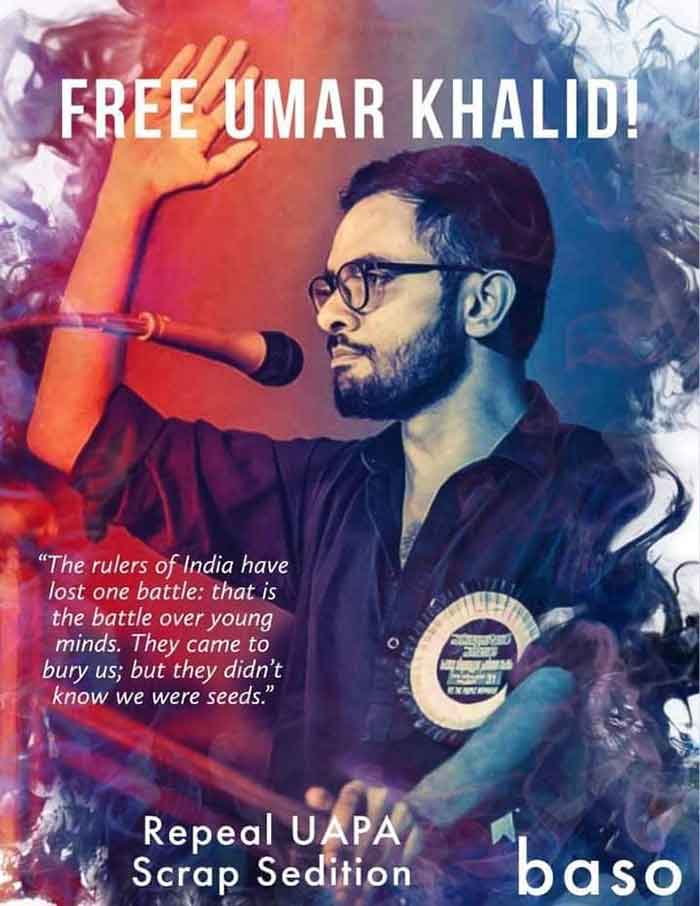
Modi has been often saying that we should convert crisis into opportunity. But instead of using it to enhance measures for fighting the Corona epidemic, his government has used it to terrorise the public. The scenes of migrant workers being punished by police are the glaring example of state terror and inhumanity towards the miserable citizens. Similarly the arrests of CAA/NRC protesters in Uttar Pradesh in December, 2019 in thousands, killing 21 persons but denying the same can give an idea as to how police power has been used to crush the voice of dissent. In Delhi riots of February 2020 the police not only connived with the attackers but now have made the victims as accused. All the social activists who participated in peaceful protests against CAA/NRC have been arrested and booked as conspirators and stringent law UAPA has been used against them. Even top leaders of political parties like Sitram Yechury of CPM, Yogindra Yadav of Swaraj India, social activist Harsh Mandar, Dr. Apoorv Nand and film maker Rahul Roy have been named in the charge sheet. Similarly a large number of student leaders and cultural activists of Jamia Milia and JNU have been incarcerated on false grounds. The recent arrest of Omar Khalid is an example of blatant misuse of police power.

From the above it can be seen that under Modi government India is fast becoming a police state. Normal laws are being made more stringent. The black laws like sedition, UAPA and NSA are being used profusely. The writers, Social activists, human rights defenders and opposition leaders are being implicated on trumpeted up charges. Unfortunately courts are also not coming to the rescue of the common man as expected. Police and other police agencies are being misused to punish the opponents or dissenters. Hence it is the high time that all those who believe in democracy and rule of law should join hands to stand against the onslaught authoritarianism and not allow our country to become a police state.  Since it is the outcome of political strategy of Hindutva forces it has to be encountered at a political plane.

SR Darapuri IPS (Retd.) National Spokesperson, All India Peoples Front


Conversations with P. S. Krishnan - Dr Vasanthi Devi

Conversations with P. S. Krishnan
- Dr Vasanthi Devi
Former Vice-Chancellor of
Manonmaniam Sundaranar University
P. S. Krishnan:
Bending Governance Towards the Deprived
"Undue partiality to depressed classes, strident advocacy of inter-caste marriages, uses his knowledge of Sanskrit to debunk religion, trusts the words of the villagers rather than village officers, acts in a manner that helps subversive elements"
A worthy superior’s remarks in Krishnan’s Confidential Report (CR) early in his career:
Some are born with an obsession; some develop one early in life and then the obsession possesses them and drives them all their lives. The cause and the crusader often become indistinguishable, the triumphs and also setbacks of the cause mark the milestones in the crusader’s life. This piece is both a salutation to the crusader and a re-affirmation of the cause.
P.S.Krishnan has been an outstanding champion of the exploited and deprived sections of Indian society. Throughout his life from his student days in his native Kerala and later as a member of I.A.S. in the Andhra Pradesh cadre (initially Hyderabad cadre prior to linguistic reorganisation of States in 1956) and during his post-retirement phase, he has been vigorously and consistently working for the advancement and empowerment of the Scheduled Castes (SC), Scheduled Tribes (ST) and Socially and Educationally Backward Classes (SEdBC) [also known as Other Backward Classes (OBCs) and Backward Classes (BCs)], including religious minorities belonging to them.
He sought to mould governance and public administration into a pro-active instrument of reaching out to the deprived communities. In this quest, he has often faced antagonism, hostility and persecution. He has been pulled up by higher authorities more than once for his totally unconventional ways of governance.
As a young officer in Andhra Pradesh, he pioneered as early as in 1957, the practice of officially camping in Scheduled Caste basties, tribal villages and hamlets of labouring Backward Classes, thereby infusing confidence and self esteem in them and giving a cue to the echelons of governance. He pioneered massive drives for the distribution of agricultural lands and house sites to the landless and homeless, which are milestones in governance of Andhra Pradesh.
In various capacities from Collector up to Secretary, Govt. of India, he conceived and implemented various pioneering initiatives for the deprived classes like the Special Component Plan for Scheduled Castes (SCP) in 1978 and the Special Central Assistance to the States’ SCPs and Cental Assistance to States for their SC Development Corporations and many other schemes.
He was the main person behind a number of constitutional and legislative enactments like the Constitution (65th) Amendment Act, 1990 vesting constitutional status in the National Commission for SCs and STs, legislation providing SC status to Dalit Buddhists, the SC and ST (Prevention of Atrocities) Act 1989 (and later the SC and ST (Prevention of Atrocities) Amendment Act, 2015), the Employment of Manual Scavengers and Construction of Dry Latrines (Prohibition) Act, 1993 (and later the Prohibition of Employment as Manual Scavengers and their Rehabilitation Act, 2013). As Secretary, Ministry of Welfare in 1990, he persuaded the Govt. to accord long-denied recognition for the Socially and Educationally Backward Classes at the national level and provide reservation for them.
After retirement in 1990, he was a Member of the National Commission for SCs and STs in 1991-92 and Member of the Expert Committee on Backward Classes in 1993 and Member-Secretary, National Commission for Backward Classes, 1993-2000. In that capacity, he operationalised Reservation for BCs, prepared Central (Common) Lists of BCs, ensuring that genuinely backward communities left out were brought into the Central List and communities not socially backward were scrupulously kept out.
The Govt of Andhra Pradesh took his help as Advisor in 2007 to identify the Socially and Educationally Backward Classes of Muslims and on the basis of his encyclopaedic analysis, the Govt enacted legislation providing 4% reservation for Muslim BCs.
He is closely associated with a number of NGOs working for the rights of SCs, STs, BCs including Muslim and other Minority BCs. He has been the Chairman and a member of many Working Groups and Steering Committees of the Planning Commission on these communities.
He is the author of books, documents, papers on the subject of Social Justice, some published and others in the pipeline.
This book is a themes-based and issues-based account of Krishnan’s life-journey, work and ideas, brought out through my Questions on specific themes and issues of Social Justice and his Responses. Arising from this format, the book does not follow chapterisation based on individual-based chronological sequencing as in usual biographies/autobiographies, but is arranged on the basis of thematic continuity and unity, highlighting the theme of/issue in each Question at its beginning. Originally, these Questions were framed by me in a differnet context, viz., to elicit more information than I already had about him in order to enable me to write an Introduction to a book of Mr Krishnan (translated in Tamil by Thiru T. Neethirajan) which was released on 9.1.2017 at Chennai under the title ‘Jaati Ozhippukkaana Chennai Prakatanam’ (‘Chennai Declaration for Caste Eradication’). I reuested him to answer each question in as full detail as possible unconstrained by considerations of length. This grew into the present full-length book of theme-based and issued-based account of his life-long jouney.
Dr Vasanthi Devi
Former Vice-Chancellor of Manonmaniam Sundaranar University


Thursday, 10 September 2020

The Police in India Is Both Casteist and Communal

The Police in India Is Both Casteist and Communal

The Police in India Is Both Casteist and Communal

In December 2018, a video recording of a police officer from Maharashtra, Bhagyashree Navtake, went viral wherein she is seen bragging about how she files false cases against Dalits and Muslims and tortures them. What she said represents a crude but true picture of social prejudices in India’s police force.

It is a fact that after all, our police officers and constables come from the society, and hence the police organisation is a true replica of our society.

It is well known that our society is divided on caste, religious and regional lines. Therefore, when individuals enter the police force, they carry all their biases and prejudices with them.

These biases become stronger when such persons come to occupy positions of power.

Their personal likes and dislikes, caste and communal prejudices influence their actions very strongly. These biases are often displayed in their behaviour and actions in situations where persons of other castes or communities are involved.

A situation of blatant caste discrimination came to my notice when I was posted as assistant superintendent of police (ASP), Gorakhpur, in 1976.

As ASP, I was in charge of the Reserve Police Lines. One Tuesday, which was a Parade Day, while on a round of the police mess, I found that some policemen were dining on the cemented tables and benches whereas some were sitting on the ground while eating.

This struck me as odd. I called a head constable and enquired about this situation. He told me that those sitting on the benches are ‘upper-caste’ men and those sitting on the ground are ‘lower-caste’ men.

I was wonderstruck to see this blatant display of caste discrimination in the Police Lines, and decided to end this discriminatory practice. From that time on, when I noticed this, I asked the policemen sitting on the ground to get up and sit on the benches.

A still from the ‘Class of ’83’, showing police personnel in training.

Although I had to repeat my instructions more than once, I was eventually able to discontinue the discriminatory practice of segregated dining.

Incidentally, during that very period, I was asked by my boss to submit a report on the observations made by the commissioner for Scheduled Castes and Scheduled Tribes (SCs and STs), who in a 1974 report had mentioned the practice of segregation in the messes of the Police Lines of eastern UP and Bihar.

I told my boss that this was true and that I had abolished this practice only recently. He told me that I should just mention that it is “not prevalent now”.

I don’t know about other districts of eastern UP but in Gorakhpur I could at that time ensure the end of caste-based segregation among the police.


Although the commissioner for SCs and STs had pointed out this discriminatory practice decades ago, it is shocking that it continues even today. It was reported a while ago that the practice of segregated dining still continues, and that there are separate barracks for upper and lower caste men in Bihar Police.

Actually, the police force, on account of its composition, is dominated by ‘upper-caste’ men and such discriminatory practices continue unabated.

It is only due to the reservation policy that some persons belonging to the ‘lower’ castes, especially SCs and STs, have found a place in the police force. This has made the forces more secular and representative. However, minorities are still very poorly represented. Also, caste, communal and gender biases are still quite strong in policemen.

As we know, there have been frequent complaints of communal bias against the Provincial Armed Constabulary in UP. I found these complaints to be true when I was posted as commandant of 34 Battalion PAC Varanasi in 1979. I had to make lot of efforts to secularise my men.

I always made it a point to tell them to be above caste and communal biases. I used to tell them, ‘Religion is your personal affair. When you put on your uniform, you are only policemen and are duty bound to act according to law.’

My constant briefing and debriefing had a very salutary effect on them, and I was able to secularise my men.

This was put to test in 1991 during a communal riot in Varanasi. In the 1991 general election, a retired IPS officer, Chand Dixit, was contesting from Varanasi city as a Vishwa Hindu Parishad (VHP) candidate. As usual, the VHP had engineered a communal riot to keep the Muslims away from voting. As a result, a curfew was imposed.

News appeared in the papers that PAC men had resorted to looting and beating people up in a Muslim locality. I immediately made inquiries. To my surprise, I found that these men were not from the PAC but from the Border Security Force (BSF), who had resorted to looting, destroying property and beating up old men and women in the Muslim area.

Representative image. Delhi Police special commissioner (Law and Order) S.N. Shrivastava inspects Johar area of the riot-affected northeast Delhi on Wednesday, Feb. 26, 2020. Photo: PTI/Manvender Vashist

This shows that communal biases existed not only in the PAC but even among the Central para military forces. No such complaint was received from the localities where men of my battalion were posted.

I have seen that the behaviour of the lower ranks of the police mainly depends on the behaviour and attitudes of higher ranking officers. If higher ranking officers have caste and communal biases, then they are likely to accentuate the same among the men under them. I have personally seen many top ranking police officers openly displaying their caste and communal biases.

The truth is that many IPS officers do not show any change in attitude towards ‘lower’ castes and other communities even after receiving such a rigorous training.

Changing one’s attitude is the most difficult thing because it requires a lot of effort to relieve oneself of ingrained prejudices and biases. Communal biases are so often displayed in so-called ‘terror’ cases where there are lot of complaints of Muslims being falsely implicated.

Also read: ‘Just a Cricket Match’: 10 J&K Men Booked Under UAPA For Playing in Memory of Slain Militant

In my personal experience, a role model in the form of higher ranking officers plays a very important role in changing the attitudes and behaviour of lower ranking policemen.

My efforts in this regard were once again put to the test in 1992 when the infamous Ram Mandir movement was in full swing.

Representative image of Bajrang Dal members in Jammu. Photo: PTI

One day, the Bajrang Dal people had planned to hold a demonstration. They were to convene at the premises of the famous Hanuman Mandir of Varanasi. The administration had planned to arrest them as soon as they came out of the temple gate. They had put PAC men to surround the agitators and put them in the buses.

The city SP and city magistrate were on the spot.

When the agitators came out of the gate, the officers on duty ordered the PAC men to surround them and put them in the buses. But to their utter shock, the PAC men did not move at all and the agitators started moving towards the city.

More PAC men had to be rushed to the spot from the city control room. As soon as they arrived, they surrounded the agitators and put them in buses. Thus, a possible disturbance in the city could be avoided due to the prompt action of these PAC men.

I was happy to note that this latter group of PAC men belonged to my battalion. The other PAC men who had refused to act belonged to another battalion which was notorious for indiscipline.

This prompt action by my men was appreciated by the district administration and the recalcitrant PAC men were removed from duty. Leadership in a uniformed force makes a lot of difference.

Also read: More Than 2,500 Sitting MLAs and MPs Face Criminal Cases, Supreme Court Informed

As seen from the video of the Beed IPS officer Bhagyashree Navtake, it is obvious that if officers like her occupy a position of authority they are likely to act in a partial manner. A constant watch needs to be kept on such officers. They should not be put on such duties where they can display their prejudices.

It is also necessary to change the composition of the police force by recruiting more men from minorities in order to make it representative and secular. Training programmes for both officers and men should be organised to sensitise them about SC/ST, minorities and women issues.

S.R. Darapuri is a former IPS officer and president of the Mazdoor Kisan Manch.

Courtesy: The Wire.In

Constitutional Democracy and the Role of Public Movements in India: An Ambedkarite Perspective

  Constitutional Democracy and the Role of Public Movements in India: An Ambedkarite Perspective SR Darapuri National President, All Ind...